
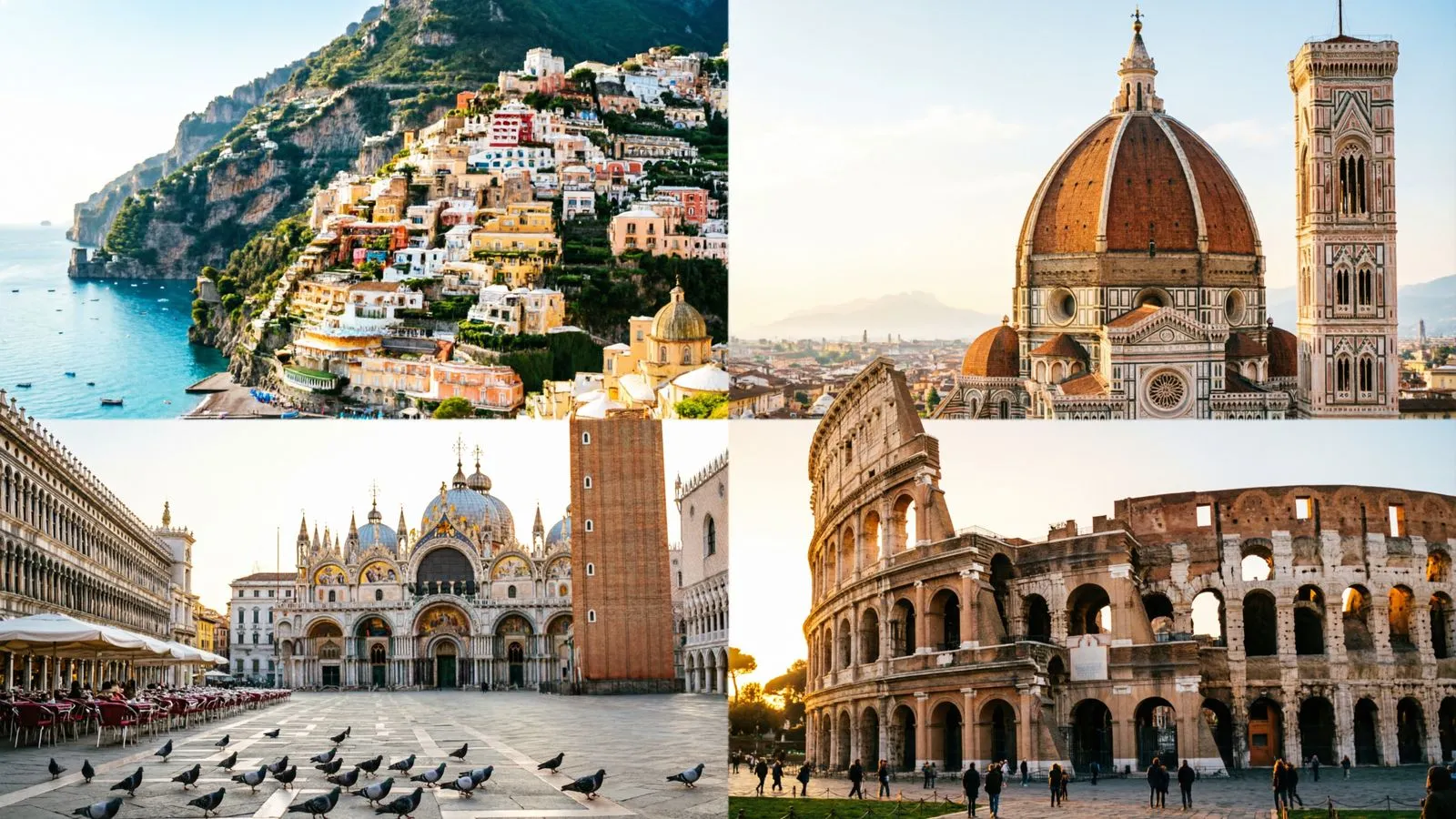
Italy is not one kind of trip. You can spend the morning inside an ancient Roman landmark, eat lunch in a hill town, and finish the day beside the sea. The best places to visit in Italy include Rome, Florence, Venice, the Amalfi Coast, Naples, Tuscany, Lake Como, Puglia, Sicily, and the Dolomites. Together, they cover Italy’s biggest draws—from art and history to food, beaches, lakes, and mountain scenery.
Quick Answer:
For a first trip, start with Rome, Florence, and Venice. Add Tuscany for countryside and wine, the Amalfi Coast for dramatic coastal scenery, or Naples for pizza and Pompeii. Lake Como and Puglia offer a slower pace, while Sicily and the Dolomites make more sense when you have extra time.
1. Rome
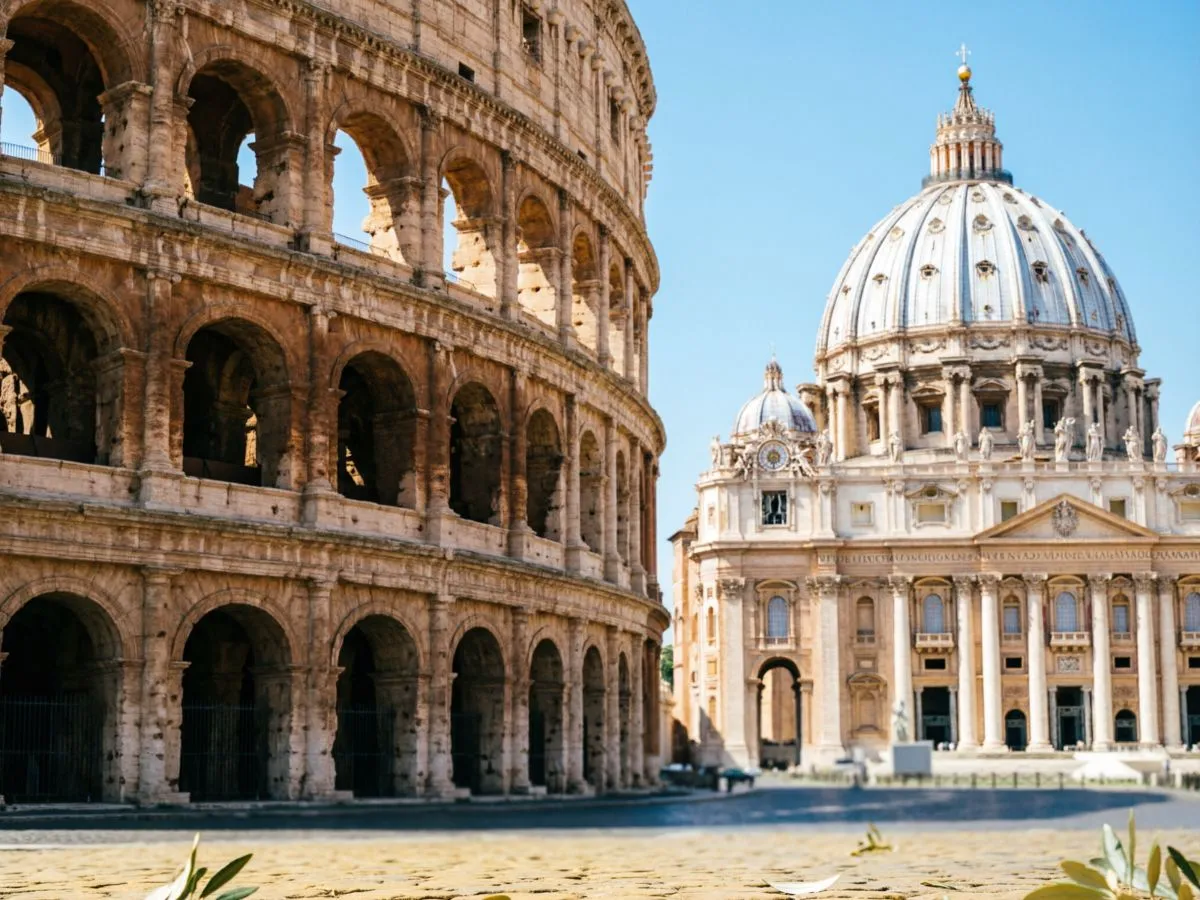
Rome gives you the biggest concentration of history in one place. See the Colosseum, Roman Forum, Pantheon, and Vatican City, but leave time for neighborhood walks and long lunches. The city is large, so grouping sights by area saves time.
Typical October temperature: 68–73°F
Best for: Ancient history, food, first-time visitors
Time needed: 3–4 days
2. Florence
Florence is compact enough to explore mostly on foot, with the Duomo, Uffizi, Accademia, Ponte Vecchio, and Renaissance art all close together. It also makes an excellent base for Tuscany day trips.
Typical October temperature: 64–68°F
Best for: Art, architecture, couples
Time needed: 2–3 days
3. Venice
Venice feels unlike anywhere else in Italy. Wander beyond St. Mark’s Square, explore quieter canals, and use the vaporetto to see the city from the water. Two nights gives you enough time to experience Venice after many day-trippers leave.
Typical October temperature: 61–64°F
Best for: Canals, photography, romance
Time needed: 2 days
4. Amalfi Coast
The Amalfi Coast is all about cliffside villages, sea views, winding roads, and long lunches overlooking the water. Positano, Amalfi, and Ravello are the classic stops, while the Path of the Gods adds a hiking option.
Typical October temperature: 68–72°F
Best for: Coastline, couples, scenery
Time needed: 3–4 days
5. Naples & Pompeii
Naples gives you a more energetic side of Italy, famous for pizza, historic streets, and underground sites. Combine it with Pompeii for an easy contrast between modern street life and an ancient city preserved by Mount Vesuvius.
Typical October temperature: 68–72°F
Best for: Food, archaeology, local culture
Time needed: 2–3 days
6. Tuscany
Tuscany is the place to slow down. Base yourself around Florence, Siena, or a smaller hill town and explore vineyards, medieval villages, olive groves, and countryside roads. October is particularly appealing for harvest-season scenery and food-focused travel.
Typical October temperature: 64–68°F
Best for: Wine, countryside, food
Time needed: 2–4 days
7. Lake Como
Lake Como works well when you want scenery without a packed sightseeing schedule. Stay around Como, Bellagio, or Varenna and use ferries to move between lakeside towns instead of driving everywhere.
Typical October temperature: 59–66°F
Best for: Lakes, relaxation, couples
Time needed: 2 days
8. Puglia
Puglia brings a different rhythm: whitewashed towns, Adriatic beaches, olive groves, and distinctive trulli houses. Base yourself around Alberobello, Ostuni, or the Itria Valley and explore by car at an easy pace.
Typical October temperature: 63–73°F
Best for: Food, villages, beaches
Time needed: 3–4 days
9. Sicily
Sicily rewards travelers who have more time. Palermo, Taormina, Syracuse, Mount Etna, Greek archaeological sites, and excellent food make the island feel almost like a separate country within Italy.
Typical October temperature: 73–77°F
Best for: Food, archaeology, warm weather
Time needed: 5–7 days
10. Dolomites
The Dolomites are Italy’s mountain showpiece, with dramatic peaks, alpine villages, hiking routes, and winter sports. October is a shoulder-season month here, so check lift, trail, and accommodation schedules before building your trip around the mountains.
Typical October temperature: 36–57°F at valley level
Best for: Hiking, mountain scenery, skiing
Time needed: 3–5 days
Altitude note: Mountain temperatures can fall sharply with elevation, and higher trails may have early snow in autumn, so layers and proper footwear matter.
Best Time to Visit Italy + Christmas Week Planning
Spring and autumn are generally comfortable for combining cities, countryside, and outdoor attractions. October is especially useful because northern Italy is cooler while central and southern regions can remain pleasantly mild or warm.
Christmas week brings markets, lights, seasonal food, and a festive atmosphere, especially in cities such as Rome, Florence, and Venice. However, December 24–26 and January 1 can have reduced attraction hours or closures, so check official schedules before booking your sightseeing days.
Getting Around Italy
Italy is well suited to a train-based trip. High-speed rail makes the Rome–Florence–Venice route particularly practical, while a rental car becomes more useful in Tuscany, Puglia, Sicily, and rural mountain areas.
If driving, watch for ZTL zones in historic centers; entering a restricted area without permission can result in a fine.
Where to Stay
Stay centrally in Rome, Florence, and Venice for easier sightseeing. Choose a coastal base on the Amalfi Coast, a lakeside town around Como, a countryside stay in Tuscany, or an inland base in Puglia. For the Dolomites, staying near your planned hiking area saves unnecessary mountain driving.
How Many Days Do You Need?
5–7 days: Rome, Florence, and Venice.
8–10 days: Add Tuscany, Naples, or the Amalfi Coast.
12–14 days: Combine the major cities with one southern or northern region.
2+ weeks: Consider Sicily, Puglia, or the Dolomites rather than trying to squeeze everything into one route.
What to Pack
Pack comfortable walking shoes, light layers, a waterproof jacket, and a small daypack. October travelers should add warmer layers for northern Italy and the mountains. If visiting churches, carry clothing that covers shoulders and knees.
FAQs
What is the best place to visit in Italy for a first trip?
Rome is the strongest starting point for history, while Florence and Venice complete a classic first-time route.
Is Italy easy to travel around by train?
Yes. Trains are particularly useful between major cities, while cars offer more freedom in rural regions.
Is October a good time to visit Italy?
Yes. Temperatures are generally more comfortable than summer, although conditions vary considerably between the Alps and Sicily.
How many days do you need in Italy?
Seven days works for the major cities; 10–14 days gives you room to add a region such as Tuscany, the Amalfi Coast, or Puglia.
Conclusion
Italy becomes easier to plan when you stop trying to see the whole country at once. Rome, Florence, and Venice make a strong first route, while Tuscany, the Amalfi Coast, Puglia, Sicily, Lake Como, and the Dolomites let you shape the trip around your interests. Pick two or three regions, allow enough time between stops, and you will experience much more than a checklist of famous sights.
Related Posts
- Best Places to Visit in the Philippines: 10 Islands, Cities & Mountain Escapes
- Best Places to Visit in Sicily: 10 Must-See Towns & Coastal Escapes
- Best Places to Visit in Puerto Rico: 10 Must-See Places & Experiences

Mark Johanson is an experienced travel and destination writer who has explored and written extensively about remarkable places around the world, bringing years of firsthand knowledge and practical insight to readers worldwide through Elvorixx.